
The TeXcellence Conference at Five: CWG Plc's Role in Advancing Africa’s Digital Future
Africa’s digital ambitions are advancing on several fronts. Businesses are adopting artificial intelligence, financial services are expanding across borders, governments are investing in digital public services, and a growing creative economy is finding new ways to reach global audiences. The opportunities are substantial, but so are the demands these ambitions place on the systems expected to support them.
The question of what it will take to move Africa’s digital economy forward brought business leaders, policymakers, technology practitioners and innovators together at the fifth edition of the TeXcellence Conference, convened by CWG Plc on 13 October 2026 at the Landmark Event Centre in Lagos. Held under the theme of Accelerating Africa’s Digital Future, TeXcellence 5.0 examined the decisions and investments that will shape the continent’s next phase of digital development.
Reaching this fifth edition is a significant milestone for a conference CWG has continued to convene as a platform for examining technology’s role in business and society. Over the years, TeXcellence has brought different parts of the African technology ecosystem into the same room. This edition extended that engagement, placing the practical requirements of digital acceleration alongside the ambition driving it.
Direction matters as much as momentum.
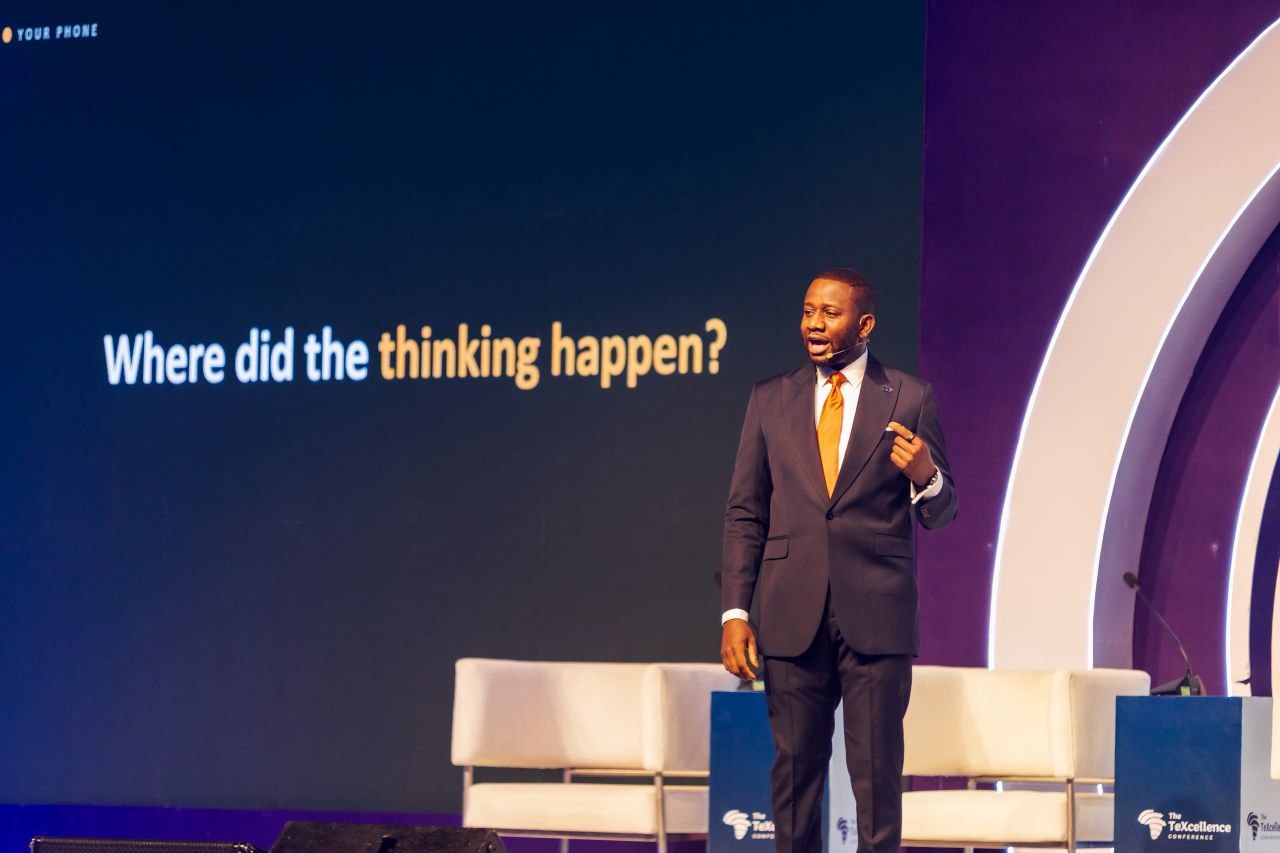
In his opening address, The TeXcellence 5.0 Framework, CWG Group Managing Director and Chief Executive Officer, Mr. Adewale Adeyipo, offered a useful starting point for the day’s discussions: “Africa has never suffered from a shortage of speed. What we’ve often lacked is direction and a sustained force.”
The observation speaks to a recurring challenge in the continent’s technology development. New products, platforms, and investments continue to emerge, but their long-term value depends on the conditions in which they operate. Capital must reach viable businesses. Infrastructure must support real demand. Institutions need the capacity to implement policy. Technology adoption must translate into measurable improvements for organisations and the people they serve.
The funding picture offers one indication of both the opportunity and the work ahead. Partech’s 2025 Africa Tech Venture Capital Report recorded approximately US$4.1 billion in combined equity and debt funding for African technology ventures in 2025, representing a 25 per cent increase on the previous year. Equity investment accounted for about US$2.41 billion, while debt contributed approximately US$1.64 billion. The figures point to renewed activity and a broader mix of financing, but investment alone cannot guarantee the conditions for scale. The ability to deploy capital effectively, sustain operations and build solutions around enduring market needs remains essential.
That relationship between ambition and the environment required to sustain it was developed further in the keynote address by Dr Obafemi Hamzat, Deputy Governor of Lagos State. Speaking on "The Enabling State: What Government Must Become for Technology to Scale", he brought the role of government into the centre of the discussion. Technology businesses need room to innovate, but the wider ecosystem also depends on public institutions that can create enabling conditions, support infrastructure and provide the policy direction required for long-term growth.
Ashanti Kunene, Founder of Learning 2 Unlearn, extended the discussion to the question of agency. Her featured provocation, "The Future Is Not Neutral: Who Gets to Design Africa’s Next Decade?", challenged the room to consider who shapes the systems, priorities, and opportunities that will define the continent’s future. It added an important dimension to the question of acceleration: the decisions being made today will influence who participates in tomorrow’s economy and whose needs are reflected in its design.
The work of making technology useful.
The demands of digital acceleration become particularly clear when organisations move beyond experimentation and begin integrating technology into their operations. Artificial intelligence is a good example. Its possibilities are widely discussed, but businesses still have to determine where it can create value, what it takes to deploy it responsibly, and how to move promising applications into everyday use.
The practical questions surrounding enterprise AI adoption also came into focus during the panel session, "AI Reality Check: What Is Actually Working in African Enterprises?" The discussion brought together Mosope Okanlawon, Founder and CEO of Corvyn AI; Rowena Turinawe, Founding CEO of RukaPay; Elitcha Kossi Mawududzi, Head of Architecture and Compliance at Agence Togo Digital; Bode Abifarin, MD/CEO of MoMo PSB; and Enoch Afolabi, Head of Growth and Partnerships at AI in Nigeria. Stephen Amaza, Building Customer Operations with AI Agents at ZAR, moderated the session.
Bringing perspectives from AI, fintech, digital government and customer operations into the same discussion created room to examine enterprise adoption from different angles. The question was how organisations can move beyond interest in AI to identify applications that address real operational needs, improve business processes, and deliver measurable value. For African enterprises, that requires an understanding of the technology alongside the business context, organisational readiness and practical considerations that determine whether an AI solution can work effectively at scale.
The same question of implementation took on a different dimension in the public sector, where the success of digital investment is closely tied to the ability of institutions to work together. Government agencies often operate with distinct mandates and administrative processes, yet citizens experience public services as connected parts of everyday life. A person seeking healthcare, for example, may need relevant medical information to be accessible across different states, even when the institutions responsible for providing care operate independently.
This was one of the considerations raised during the GovTech discussion at TeXcellence 5.0. In his GovTech Panel Keynote, "The GovTech Stack: Building Africa’s Digital Public Infrastructure", Prof. Chidiebere Onyia, Secretary to the State Government of Enugu State, set the context for examining how digital infrastructure can support more connected and responsive public institutions.
The panel that followed brought together perspectives from government, technology, infrastructure, and development. Participants included Johnson Tumusiime, Director of Governance and Risk at NITA-U; Victor Imonieroh, Business Manager, GBB South West Regional Office, Prof. Onyia; Njide Ndili, Country Director, Nigeria, at PharmAccess; and Dr Joe Abah, Vice President and Country Director, Nigeria, at DAI. Femi Taiwo, Chief Technology Officer at INITS Limited, moderated the discussion.
A key point from the exchange was the need for public institutions to think beyond individual technology projects and consider the wider systems through which government services are delivered. Where agencies develop separate platforms without sufficient coordination, citizens can encounter duplicated processes and services that remain difficult to navigate. Shared infrastructure and interoperability can help address these gaps, provided institutions establish clear rules for data access, ownership, and protection.
These considerations give digital public infrastructure a very practical measure of success: whether it reduces unnecessary steps, simplifies service delivery, and improves the experience of citizens and public institutions. The long-term value of government technology investment should be visible in the services people receive, and the resources public institutions are able to use more effectively.
Trust is an operating requirement.
The same concern with connected systems and institutional responsibility surfaced in the discussion on African digital finance. The reliability of transactions depends on more than the availability of payment technology as financial services become more interconnected. Institutions must be able to establish identity, detect suspicious activity, protect customer information, and coordinate when fraud occurs.
During the Trust, Identity, Fraud and the Rails of African Digital Finance panel session that brought together Chima Okereke, Head of Security Architecture and Engineering, FBN; Ife Johnson, CEO & Co-Founder, Juicyway; Collin Babirukamu, Executive Director, Information Technology, Bank of Uganda; Ernest Mbenkum, Founder & CEO, Interstellar and moderated by Wunmi Faiga, Chief Information Security Officer, Axiom Integrated Solutions Limited, the discussion examined a difficult reality in fraud prevention: a customer or account may pass the initial onboarding checks and still become a target once transactions begin. Fraud actors can present apparently valid documentation, establish accounts, and then use social engineering, account takeover, or stolen credentials to exploit the trust placed in digital channels.
This shifts attention towards what happens after onboarding. Continuous monitoring, identity verification, and effective coordination between institutions remain important throughout the customer relationship. Security considerations also need to inform how financial systems are designed, rather than being treated as an additional feature after the core product has been developed.
The panel raised a wider issue for the continent’s financial infrastructure: interoperability. Technology may be available to support secure transactions, but fragmented systems and the absence of harmonised standards can make collaboration more difficult. For financial institutions operating across different markets, the ability to validate identities and exchange relevant information securely is central to maintaining confidence in the system.
Trust, in this context, has direct operational and commercial consequences. Financial institutions commit to protecting the funds entrusted to them. Every transaction tests that commitment, and every weakness in identity, security, or coordination can undermine confidence in the rails on which digital finance depends.
The people and ideas behind the digital economy.
Infrastructure, policy and financial systems provide important foundations, but digital progress also depends on the people able to create, adapt, and apply technology. TeXcellence 5.0 made room for this human dimension through discussions about talent, opportunity, and the creative economy.
Tunde Onakoya, Founder of Chess in Slums Africa, brought the relationship between talent and opportunity into view through his spotlight session, "The Next Move: Talent, Opportunity and Africa’s Digital Future." His work offers a perspective on the importance of access: potential exists across the continent, but people need opportunities, support and the right environments to develop their abilities.
The conference also considered the commercial possibilities of African creativity. The panel, The Business of African Creativity: Building Global IP in the Digital Age, featured Laju Iren, Award-Winning Filmmaker and Founder of Laju Iren Films; Kenneth Gyang, Writer, Director and Producer, and Co-Founder of Cinema Kpatakpata; Stella Fubara, CEO of Fura Collective; Fola Folowosele, Vice President and Head of NBA Nigeria, NBA Africa; and David Akwara, Global Storyteller. The session was moderated by Stanley Onuorah, Economic Analyst and Fintech Advocate, and examined the conditions that allow creative ideas and talent to develop into intellectual property with wider reach. Perspectives from film, sport, storytelling and creative enterprise brought attention to the business structures, ownership questions and distribution opportunities that influence the value African creators can retain from their work.
Together, these discussions broadened the meaning of digital acceleration. The continent’s future will be shaped by the systems that enable businesses and governments to operate, but also by the people who can participate in, contribute to, and benefit from those systems.
The infrastructure beneath the ambition.
The conversations at TeXcellence 5.0 returned, in different ways, to the importance of reliable infrastructure. AI adoption requires computing capacity and dependable systems. Digital public services depend on secure data exchange. Financial transactions rely on resilient networks and trusted platforms. Creative businesses need the digital channels and infrastructure to distribute and commercialise their work.
The scale of the infrastructure gap makes this a significant consideration for Africa’s digital ambitions. The Africa Data Centres Association’s Data Centres in Africa 2026: The Economic Report estimates that the continent has approximately 360 MW of active data centre capacity, representing around 0.6 per cent of global capacity. The figure highlights the scale of the work required to expand the physical foundations supporting digital services, enterprise systems, and data-intensive technologies.
For CWG, this is a familiar and practical part of the conversation. As an enterprise technology company with operations spanning technology infrastructure and services, CWG has a direct stake in the systems organisations depend on to operate, grow and serve their customers. Its data centre capability, including environmental monitoring and power continuity infrastructure, forms part of the local infrastructure base available to organisations seeking dependable hosting and enterprise technology support.
Convening TeXcellence is one way CWG contributes to the wider discussion around these requirements. The conference creates a meeting point for the people making decisions about technology, investment, policy and implementation, while giving the ecosystem room to examine the issues that will determine whether digital ambition can be sustained.
Five editions, with the work continuing
The fifth edition of TeXcellence brought together conversations that are often treated separately: the role of the state, enterprise AI adoption, digital public infrastructure, financial trust, talent development, and the business of creativity. Their connections were evident throughout the day. Progress in one area depends, in important ways, on the strength of the others.
The conference closed with The Upgrade, a stage experience led by Drama Ensemble, followed by closing remarks from Harriet Yartey, Vice President, Regions at CWG Plc. Gloria Babarinde hosted the event.
Reaching five editions gives TeXcellence a record of sustained engagement with Africa’s technology ecosystem. It also allows CWG to keep the discussion moving beyond the conference hall: through the ideas shared, the questions raised and the work organisations take forward.
Africa’s digital future will be shaped by decisions made across boardrooms, public institutions, technology companies, and communities. TeXcellence 5.0 brought many of those perspectives together. The task ahead is to turn the ambition discussed in Lagos into systems, services and opportunities that deliver lasting value across the continent.